


Table of Contents
- Understanding Minimalist Lighting Principles
- Step 1: Choose Fixtures with Clean Lines and Simple Shapes
- Step 2: Select Finishes That Blend Into Your Space
- Minimalist Lighting Ideas for Different Room Types
- How to Choose Lighting for a Minimalist Home
- Layered Lighting for Minimalist Interiors
- Common Mistakes to Avoid
- Installation and Dimming Considerations
- Frequently Asked Questions
Last Updated: October 4, 2026
Understanding Minimalist Lighting Principles
Minimalist lighting solutions focus on simplicity, function, and restraint. At Nuits, we believe the best lighting design removes visual clutter while creating warmth and atmosphere. This approach combines clean lines, neutral finishes, and intentional placement to support calm, open spaces.
The core principles include:
- Simplicity in form: Fixtures with clean lines and geometric shapes
- Neutral finishes: Matte black, white, aluminum, and natural materials
- Functional design: Every light serves a clear purpose
- Visual restraint: Fixtures blend into the environment rather than dominate it
- Layered approach: Multiple light sources work together to create depth and flexibility
Step 1: Choose Fixtures with Clean Lines and Simple Shapes
Select fixtures with geometric forms, thin metal frames, and understated silhouettes. Avoid ornate details and heavy ornamentation.
The best minimalist fixtures share these characteristics:
- Thin, delicate frames that don't dominate the space
- Geometric shapes like cylinders, cubes, or spheres
- Smooth surfaces without texture or embellishment
- Minimal visible hardware or joints
- Simple on/off controls (or touch dimming for flexibility)
Pendant lights work exceptionally well in minimalist interiors. The Lune Épurée Hanglamp (€97.95) combines Scandinavian simplicity with Japandi warmth, allowing the room itself to be the focal point.
For wall-mounted solutions, the Cube Clair Wandlamp (€52.95) brings geometric precision with instelbare kleurtemperaturen to adjust light tone for different moods.
Choose fixture scale proportional to the room. A large pendant in a small space feels heavy; a tiny lamp in a vast area gets lost.
Step 2: Select Finishes That Blend Into Your Space
The most effective minimalist finishes are:
- Matte black: Absorbs light, creates subtle definition without harshness
- White or off-white: Blends with walls and ceilings, nearly disappears
- Aluminum or brushed metal: Reflects light softly, adds sophistication
- Natural wood: Brings warmth while maintaining simplicity
- Marble: Combines luxury with restraint through natural variation
Match fixture finish to your room's palette. White fixtures blend with white walls; natural wood or warm aluminum complements warm wood tones.
The Toine Marmer Wandlamp (€62.95) exemplifies this principle. Its massief marmer construction creates a luxe yet understated presence. The natural color variations in marble ensure each lamp is unique while remaining visually calm.
Avoid shiny finishes; they catch light and draw attention. Matte finishes create a serene, intentional feel.
Minimalist Lighting Ideas for Different Room Types
Different rooms have different lighting needs. The key is choosing fixtures and placement that match both function and aesthetic.
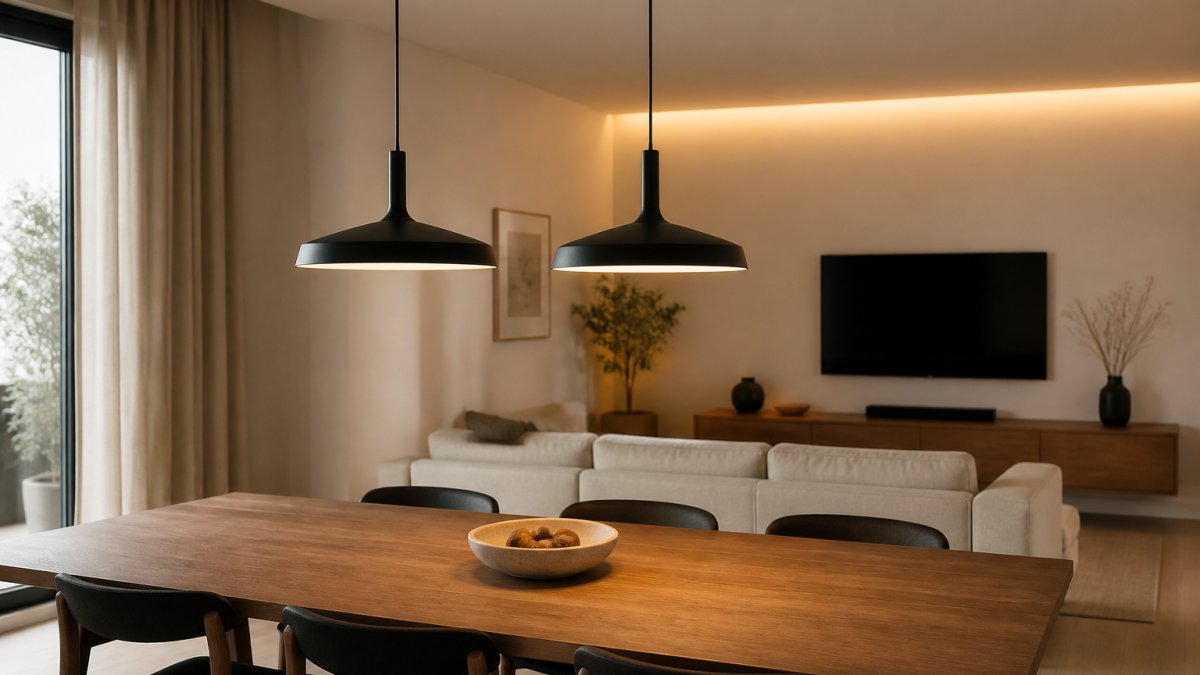
Minimalist Lighting for Living Room
Living rooms need flexible, layered lighting: bright light for daytime tasks, warm light for evening relaxation, and accent light to define space.
Start with a statement pendant above seating or dining areas. The Élodie Ronde Hanglamp (€152.95) brings golvende vorm and zachte lijnen with subtle lichtverdeling that creates a warme en serene sfeer.
Add wall sconces for ambient light. The Toine Marmer ronde variant works beautifully as a pair flanking a sofa, creating visual interest while remaining understated.
For task lighting, a single floor lamp provides reading light. The Foscarini Arc de Nuit (€382.95) offers an elegante boog with functional light distribution.
Position pendant lights 60-75 centimetres above dining tables. Wall sconces should sit at eye level when seated, typically 120-150 centimetres from the floor.
Bedroom and Entryway Solutions
Bedrooms need soft, layered lighting that promotes rest. Entryways need welcoming light that doesn't feel harsh when you walk through the door.
For bedrooms, skip overhead ceiling lights. Use wall-mounted fixtures on either side of the bed. The Cube Clair Wandlamp's instelbare kleurtemperaturen shift from neutral white for reading to warm amber for winding down.
The Lumière Suspendu Wandlamp (€40.95) brings futuristisch effect through its magnetisch zweefsysteem and houten design, with slimme sensoren that activate automatically when dark.
Entryways benefit from a single, welcoming fixture. The Lune Épurée creates a vleugje Scandinavisch that feels warm and sophisticated.
In entryways, hang pendant lights 30-40 centimetres below standard ceilings (240 centimetres) to draw the eye upward and enlarge the space.
How to Choose Lighting for a Minimalist Home
Selecting minimalist lighting comes down to three questions: What's the room's primary function? What's the existing color palette? How much light do you need?
Identify the room's main activity. Reading spaces need brighter task lighting; bedrooms need soft, warm light; kitchens need bright, functional light.
Map existing colors: dominant wall color, floor tone, and wood finishes. Warm spaces (cream walls, wood tones) need warm-toned fixtures; cool spaces (soft gray, white) need white, black, or cool aluminum fixtures.
Consider room architecture. High ceilings handle larger fixtures; low ceilings need slim designs. Open floor plans need thoughtful placement to define zones.
The Donut Touch Wand- en tafellamp (€152.95) works as both wall fixture and table lamp, letting you test placement. Its touch-dimfunctie adjusts lichtintensiteit to match actual needs.
Layered Lighting for Minimalist Interiors
Layered lighting combines ambient, task, and accent light to create depth and flexibility, preventing flat, one-dimensional rooms.
Ambient Lighting
Ambient light should feel soft and diffused. Avoid recessed ceiling lights that create harsh shadows. Instead, use:
- Pendant lights positioned to bounce light off ceilings and walls
- Wall sconces that spread light evenly across a surface
- Floor lamps with diffusing shades that soften the beam
The Susuki Élégance Hanglamp (€112.95) excels at ambient lighting, with natuurlijke materialen and cilindervormige vorm creating a warme en rustgevende sfeer through soft diffusion.
Aim for 300-500 lux ambient light in living spaces. Test: can you read comfortably without squinting? If yes, your ambient light is adequate.
Task and Accent Lighting
Task lighting supports specific activities like reading, cooking, or working. Accent lighting highlights architectural features or creates visual interest.
For task lighting, position fixtures directly above or beside the activity. A reading light should sit 40-50 centimetres from the page. A desk light should illuminate the work surface without creating glare. The Lueur Moderne tafellamp (€72.95) provides focused light for desks and bedside tables while maintaining a refined aesthetic.
Accent lighting draws attention to specific elements, artwork, architectural details, or plants. Use a single focused light rather than multiple accent sources. The Métal Noir hanglamp (€142.95) creates opvallend lichtspel through its dunne metalen strepen, making it both decorative and functional.
Layer these three types by using separate controls. Dimmer switches let you adjust ambient light. Individual task lights turn on only when needed. Accent lights activate for evening ambiance. This flexibility is the real power of layered lighting.
| Lighting Type | Purpose | Typical Fixture | Brightness |
|---|---|---|---|
| Ambient | Overall room illumination | Pendant, wall sconce, floor lamp | 300-500 lux |
| Task | Activity-specific light | Table lamp, desk lamp, wall-mounted | 500-1000 lux |
| Accent | Visual interest, highlight features | Focused pendant, directional wall light | 100-300 lux |
Common Mistakes to Avoid
Even with good intentions, minimalist lighting can go wrong. Watch out for these frequent pitfalls.
Choosing fixtures that are too small. A tiny pendant light in a large room looks lost and creates insufficient illumination. The fixture should feel proportional to the space. In a room with 300-centimetre ceilings, a 20-centimetre diameter pendant feels appropriate. In a 240-centimetre space, scale down to 15-20 centimetres.
Installing lights too high or too low. Pendant lights hung too high cast shadows and feel disconnected from the space below. Lights hung too low create an oppressive feeling. Follow the 60-75 centimetre rule above dining tables and 120-150 centimetre rule for wall sconces.
Mixing too many fixture styles. One pendant light plus two wall sconces plus a floor lamp in different finishes creates visual noise. Stick to one or two complementary fixture styles per room.
Ignoring color temperature. Mixing warm (2700K) and cool (4000K) light in the same room creates visual confusion. Choose one temperature for ambient light and stick with it. Task lights can be slightly cooler, but keep the shift subtle.
Forgetting about dimming. Even the best minimalist fixture feels harsh at full brightness. Install dimmer switches on at least your ambient lighting. This single change transforms how a room feels throughout the day.
Installation and Dimming Considerations
How you install and control your lighting affects both function and aesthetics.
For wall-mounted fixtures, plan installation before purchasing. Check for studs, electrical wiring, and existing outlets. Some fixtures like the Cube Clair require minimal installation, just mount to the wall and connect USB-C charging.
Dimmer switches are essential for minimalist lighting. They let you adjust brightness to match the time of day and activity. Install dimmers on all ambient lighting circuits.
The Donut Touch includes touch-dimfunctie built in, giving you brightness control without requiring a separate dimmer switch. This is particularly valuable in rental spaces where you can't modify existing electrical infrastructure.
For renters concerned about permanent changes, wireless smart bulbs offer flexibility. You can adjust brightness and color temperature through an app without any installation. Pair them with minimalist fixtures for full control without commitment.
Consider smart home integration if you want scheduling and automation. Set lights to gradually brighten in the morning and dim in the evening. Create scenes for different times of day.
Test your lighting before finalizing installation. Use temporary fixtures to see how light falls at different times of day. What looks perfect at noon might feel wrong at 6 PM.
Styling minimalist lighting solutions transforms how your space feels. The process starts with understanding that less is more, fewer fixtures, simpler forms, and intentional placement create more impact than abundance.
At Nuits, we've curated lighting that embodies these principles. Our collection ranges from the Lumière Suspendu at €40.95 to the Foscarini Arc de Nuit at €382.95, each designed to bring calm and warmth to your home.
The official guide to lighting design principles provides deeper technical knowledge. For sustainability information, standards for energy-efficient lighting outlines current regulations. Understanding these frameworks helps you make choices aligned with both aesthetics and environmental responsibility.
Start with one room. Choose a single statement fixture that matches your space's color palette. Layer in ambient, task, and accent light. Use dimmers to create flexibility.
Frequently Asked Questions
What colour temperature is best for minimalist lighting?
Warm white light (2700K-3000K) creates a calm, inviting atmosphere that suits minimalist interiors. Cool white (4000K-5000K) works for task-focused areas like kitchens or workspaces. Many minimalist lighting solutions, like the Cube Clair, offer adjustable colour temperatures so you can shift between moods without clutter. Start with warm tones to establish the serene feel minimalism demands.
How do you layer lighting in a minimalist room without creating visual clutter?
Layered lighting for minimalist interiors means combining ambient (overhead or ceiling), task (focused work light), and accent (subtle mood) sources. Use recessed or slim-profile fixtures that blend into the ceiling or walls. Mount wall lamps like the Toine Marmer at consistent heights, and place floor lamps in corners to avoid crowding the room. The key is spacing fixtures so each serves a function without competing for attention.
Can I install minimalist lighting in a rental apartment?
Yes. Wall-mounted fixtures like the Cube Clair and Lumière Suspendu use standard wall anchors that leave minimal damage. Magnetic or adhesive-backed options avoid drilling entirely. Portable floor lamps (such as the Foscarini Arc de Nuit or Lueur Moderne) require no installation. Nuits offers a 30-day money-back guarantee, so you can test how solutions work in your space before committing. Always check your lease for mounting restrictions.
How do I know what brightness level will create a cozy atmosphere?
Start with 300-500 lumens for ambient living spaces and 750-1000 lumens for task areas. Dimmable fixtures like the Donut Touch give you control to adjust brightness to your preference. Test fixtures in your actual room at different times of day, what looks cozy at dusk may feel dim at dawn. Nuits's 30-day guarantee lets you trial options before deciding, so you can see how a lamp performs in your specific lighting conditions.

