


Table of Contents
- What Price Really Tells You About Lighting Quality
- How to Evaluate Light Fixture Quality: The Key Specifications
- Lighting Color Rendering Index Explained
- Energy Efficiency and Total Cost of Ownership
- Lifespan, Lumen Depreciation, and Long-Term Reliability
- The Hidden Environmental and Waste Impact
- When Premium Lighting Delivers Real Value
- Frequently Asked Questions
Last Updated: October 1, 2026
What Price Really Tells You About Lighting Quality
The assumption that expensive lighting is better quality persists because, on the surface, it makes intuitive sense. Higher price often correlates with better materials, more rigorous testing, and longer lifespans. But this relationship isn't automatic, and it's where many buyers get it wrong.
Price reflects multiple factors: brand reputation, design prestige, manufacturing location, and marketing spend. A lamp costing €300 might perform identically to one at €80 in terms of light output and durability, yet cost four times as much because of its designer name or retail positioning.
The real question isn't whether expensive lighting is better. It's whether you're paying for performance improvements or for something else entirely. Understanding the difference saves money and prevents buyer's remorse.
How to Evaluate Light Fixture Quality: The Key Specifications
The best way to assess whether a light fixture justifies its price is to examine the technical specifications that directly impact performance and longevity. Rather than relying on price as a proxy for quality, learning to read a spec sheet empowers you to verify manufacturer claims yourself.
Understanding Standardized Testing Metrics
Manufacturers use two critical standards to measure LED longevity: LM-80 and TM-21. These aren't marketing terms, they're standardized test protocols recognized across the industry.
LM-80 measures how brightness degrades over time under controlled laboratory conditions. A fixture tested under LM-80 has been run continuously and measured at regular intervals to track lumen output decline. When you see a spec sheet claiming "L70 at 50,000 hours," this means the fixture maintains 70% of its original brightness after 50,000 hours of operation, data derived from LM-80 testing.
TM-21 projects long-term performance beyond the actual test period. Since testing a fixture for 25,000 hours takes months, manufacturers use TM-21 to extrapolate results. A fixture tested for 6,000 hours under LM-80 might be rated "L80 at 25,000 hours" using TM-21 projection. This is legitimate, but it's an estimate, not measured data. When comparing fixtures, prefer those with longer actual LM-80 test data rather than pure TM-21 projections.
A €45 fixture with L70 at 25,000 hours (actual LM-80 data) is more reliable than a €120 fixture claiming L90 at 50,000 hours based entirely on TM-21 projection. Price doesn't determine credibility; testing methodology does.
Material Composition and Build Construction
Material quality determines whether a fixture will look good in five years or deteriorate within two. Premium fixtures typically use solid metals, high-grade plastics, or natural materials like marble or glass that resist wear and maintain their appearance.
Cheaper fixtures often use thin metals that bend easily, low-grade plastics that become brittle under heat, or finishes that tarnish or chip quickly. When you examine a light fixture, check the weight, heavier generally indicates denser materials. Feel the joints and seams; they should be smooth and tight, not loose or rough.
The Toine Marmer wandlamp at €62.95 demonstrates this principle: solid marble construction means the fixture won't degrade like painted metal would. Natural stone develops character over time rather than showing wear. This is why material choice sometimes justifies a higher price, it's not about status, it's about durability.

Thermal Management and Heat Dissipation
LED fixtures generate heat, and how well a light manages that heat determines whether it lasts 25,000 hours or fails after 5,000. Poor thermal management causes components to degrade rapidly and light output to decline faster than it should.
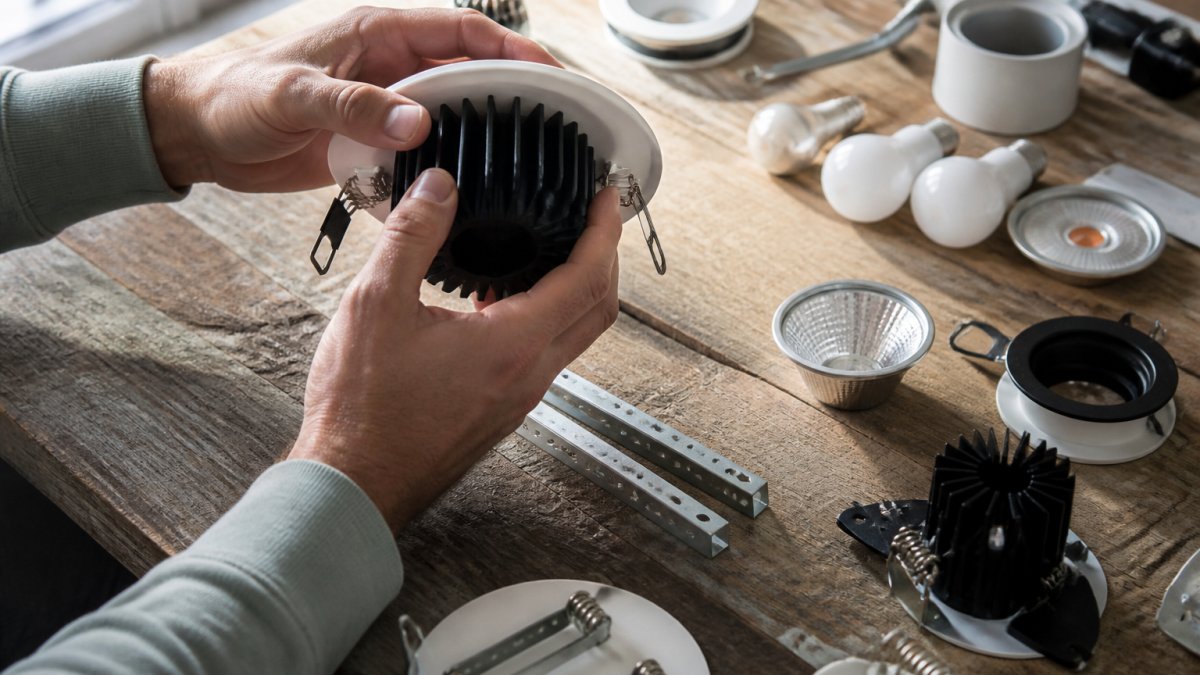
Quality fixtures include heat sinks, metal structures designed to absorb and dissipate heat away from sensitive components. You won't always see these directly, but you can infer their presence by the fixture's weight and construction. Heavier fixtures with more metal typically have better heat management than lightweight designs.
Driver efficiency also matters. The driver is the electronic component that powers the LED. Efficient drivers waste less energy as heat and generate less stress on other components. This is rarely advertised on product pages, but it's one reason premium fixtures last longer, they're engineered to minimize internal heat buildup.
Electrical Certification and Safety Standards
Any light fixture sold in the region should carry certification marks indicating it meets safety standards. Look for CE marking, which confirms the fixture has been tested for electrical safety and electromagnetic compatibility. This isn't optional; it's a legal requirement.
Some manufacturers go further and pursue additional certifications or testing protocols. These add cost but reduce risk of electrical failure or safety hazards. When comparing fixtures at different price points, check whether both carry the same certifications. If one is significantly cheaper and lacks proper certification, that's a red flag regardless of design appeal.
Lighting Color Rendering Index Explained
Color rendering index, or CRI, measures how accurately a light source reveals the true colors of objects compared to natural daylight. The scale runs from 0 to 100, where 100 represents perfect color accuracy.
Most commercial LED fixtures offer CRI between 70 and 90. For general home lighting, CRI 80 is acceptable. For spaces where color accuracy matters, kitchens, bathrooms, art studios, or retail displays, CRI 90 or higher makes a noticeable difference. Objects appear more vibrant, skin tones look healthier, and the overall space feels more natural.
Higher CRI doesn't always mean higher price, but it does require better LED selection and more precise manufacturing. When you're comparing fixtures, check the CRI specification. A €65 lamp with CRI 90 outperforms a €150 lamp with CRI 75 for color quality, even though it costs less. This is exactly where understanding specifications beats relying on price alone.
Energy Efficiency and Total Cost of Ownership
The upfront cost of a light fixture is only part of what you'll actually spend. Energy consumption, replacement frequency, and maintenance add up over time. A fixture that costs more initially but uses less electricity and lasts longer can be significantly cheaper overall.
LED fixtures consume far less energy than older incandescent or halogen designs. But even among LEDs, efficiency varies. Driver efficiency, lumen-per-watt output, and heat management all affect how much electricity a fixture actually uses. Over 10 years, a more efficient fixture can save enough on electricity to offset a higher purchase price.
Replacement frequency matters too. A €100 fixture that fails after three years costs more than a €150 fixture lasting ten years. When evaluating price, calculate the total cost of ownership: purchase price plus estimated energy costs plus replacement cycles. This reveals whether expensive really means better value.
Lifespan, Lumen Depreciation, and Long-Term Reliability
LED fixtures don't fail suddenly like incandescent bulbs. Instead, they gradually lose brightness over time, a process called lumen depreciation. A quality fixture might lose only 10% brightness after 25,000 hours. A poor-quality fixture might lose 30% or more, making it noticeably dimmer long before it stops working entirely.
Manufacturers measure this through standardized testing.
The Hidden Environmental and Waste Impact
Manufacturing and disposal create environmental costs that don't appear on price tags. Cheap fixtures made with low-quality materials often end up in landfills within a few years. Premium fixtures designed for longevity reduce waste over their lifetime, but the calculation depends on where and how often the light is used.
Application-Specific Durability ROI
Not all lighting requires the same quality investment. Understanding where durability matters most helps you spend wisely on environmental impact.
Material Sourcing and Circular Design
Fixture material sourcing matters as much as longevity. Fixtures using recycled metals, sustainably harvested wood, or responsibly sourced glass have lower environmental impact than those using virgin plastics or rare materials. Some manufacturers publish environmental impact data; others don't.
When Premium Lighting Delivers Real Value
Expensive lighting justifies its cost in specific situations. Design-forward pieces that define a room's aesthetic, statement pendant lights or sculptural floor lamps, often command premium prices because they're functional art. The Foscarini Arc de Nuit at €382.95 isn't expensive because it's technically superior to cheaper arc lamps. It's expensive because the design, engineering, and brand heritage create value beyond basic function.
| Specification | What It Reveals | Why It Matters |
|---|---|---|
| Material composition | Durability and aesthetic longevity | Cheap materials deteriorate visibly within years |
| Heat sink design | Thermal management capability | Poor heat dissipation shortens lifespan significantly |
| CRI rating | Color accuracy and light quality | CRI 90+ makes colors appear natural and vibrant |
| Lumen depreciation rate | Brightness retention over time | L80 means fixture stays bright for much longer |
| Certification marks | Electrical safety compliance | CE marking confirms tested safety standards |
| Warranty length | Manufacturer confidence in reliability | Longer warranties indicate expected durability |
Frequently Asked Questions
What justifies the price difference in expensive lighting fixtures?
Premium lighting costs more because of superior materials, precision manufacturing, advanced thermal management, higher color rendering index (CRI) ratings, and longer lifespan. Expensive fixtures also undergo rigorous safety testing, use better electrical components with lower failure rates, and often feature dimming compatibility and flicker-free drivers. Budget options cut corners on these specifications, resulting in shorter lifespans and lower light quality, making the higher upfront cost a better investment over time.
How do I know if a light fixture has good color rendering index quality?
Look for a CRI rating of 90 or above on the product specifications. CRI measures how accurately colors appear under that light, on a scale of 0-100. A CRI of 95+ is excellent and ensures colors appear natural and vibrant. Premium fixtures consistently achieve high CRI ratings because they use better LED components and quality drivers. Budget lighting often has CRI ratings between 70-80, which causes colors to appear dull or distorted. Check the technical specifications before purchasing.
Do expensive light fixtures really last longer than budget options?
Yes, when measured by actual lifespan and lumen depreciation. Premium fixtures typically maintain 90% of their light output after 50,000 hours, while budget options drop to 70% brightness much sooner. High-quality heat sinks and thermal management prevent component degradation, extending lifespan by years. Better electrical certification and circuit protection reduce failure risk. Over a 10-year period, a premium fixture often outlasts three budget replacements, offsetting the higher initial cost through replacement frequency alone.
Is it worth investing in premium lighting for a rental apartment?
Yes, especially with wireless or magnetic mounting options. Premium fixtures like the Éclat Serein offer USB-rechargeable, magnetic wall mounting that requires no permanent installation, making them ideal for renters. You can take them with you when you move. The 30-day money-back guarantee also protects your investment if the fixture doesn't suit your space. Premium designs that work as accent or task lighting can enhance a temporary living situation.

