


Table of Contents
- Understanding Color Temperature and the Kelvin Scale
- Warm vs Cool Lighting: Key Differences
- How to Choose LED Color Temperature for Your Space
- Best Lighting for Kitchen Tasks and Workspaces
- Room-by-Room Lighting Recommendations
- Lighting Temperature and Your Wellbeing
- Mixing Warm and Cool Lighting in One Room
- Frequently Asked Questions
Last Updated: September 20, 2026
Understanding Color Temperature and the Kelvin Scale
The Kelvin scale measures how warm or cool light appears, ranging from 1000K (candlelight) to 10000K (clear sky). When choosing warm vs cool lighting temperature, you're essentially selecting where on this spectrum your bulbs fall. Lower numbers mean warmer, more orange-tinted light. Higher numbers produce cooler, bluer tones. This simple measurement determines whether a room feels cozy or energizing, and it's the foundation for every lighting decision you'll make in your home.
Color temperature isn't just aesthetic preference, it's physics. The Kelvin scale originated from observing how heated metal changes color as temperature increases. A piece of iron heated to 2700K glows warm amber. Heat it to 5000K and it appears neutral white. Push it to 6500K and it takes on a cool, bluish cast. Your light bulbs work the same way, whether they're traditional incandescent, LED, or any other technology.
Understanding this scale matters because it directly affects how you perceive your space. The same room painted the same color will feel entirely different under 2700K warm light versus 5500K cool light. One invites relaxation. The other promotes focus. Neither is "better", they're simply different tools for different purposes.
Warm vs Cool Lighting: Key Differences
The distinction between warm and cool light goes beyond color. Each temperature range creates a specific psychological and functional effect in your space.
Warm White Light (2700K-3000K)
Warm white light mimics the glow of traditional incandescent bulbs and sunset. At 2700K, light takes on a distinctly golden-orange hue. By 3000K, it's still warm but slightly less saturated. This range feels inviting and intimate. Warm light suppresses the production of blue light, which means it won't interfere with your body's natural melatonin production in the evening, a key advantage if you use these bulbs in bedrooms or living areas after sunset.
Warm light also flatters skin tones and makes materials like wood, leather, and fabric appear richer and more textured. This is why restaurants, hotels, and high-end retail spaces favor warm lighting. It creates an atmosphere of comfort and luxury. The downside: warm light can reduce visual clarity for detailed tasks. If you're reading fine print or doing precision work, warm light alone may not be sufficient.
Cool White and Daylight (4000K-6500K)
Cool white light (4000K-5000K) sits in the neutral zone. It's neither warm nor cold, making it versatile for kitchens, bathrooms, and workspaces. At this temperature, colors appear true to life. You see what you're actually buying, cooking, or working with, no warm cast, no cool shift.
Daylight (5500K-6500K) mimics midday sun. It's the brightest-feeling light available from a bulb, even if the lumens output is identical to a warmer option. Cool and daylight temperatures stimulate alertness and focus. They're ideal for task lighting, reading, and any activity requiring concentration. The trade-off: prolonged exposure to cool light in the evening can suppress melatonin, potentially disrupting sleep if you're exposed too close to bedtime.
| Color Temperature | Kelvin Range | Best Use | Mood | Visual Clarity |
|---|---|---|---|---|
| Warm White | 2700K-3000K | Bedrooms, living rooms, dining | Cozy, intimate | Lower |
| Neutral White | 4000K-5000K | Kitchens, bathrooms, offices | Balanced, professional | High |
| Cool/Daylight | 5500K-6500K | Task areas, workspaces, reading | Alert, energizing | Highest |
How to Choose LED Color Temperature for Your Space
Selecting the right color temperature starts with understanding what you'll actually do in each room. The most common mistake is choosing based purely on aesthetics without considering function. A bedroom that looks beautiful under cool light will feel harsh and sleep-disrupting. A kitchen that looks cozy under warm light may make food preparation frustrating.
Start by identifying the room's primary purpose. Is it for relaxation, work, or a mix of both? Next, consider how much natural light enters the space. A room flooded with cool daylight benefits from warm artificial light to balance it. A north-facing room with minimal natural light might need cooler bulbs to feel bright and welcoming.
Then test before committing. If you're replacing all bulbs in a room, buy a single bulb in your target temperature and observe it for a few days at different times. Notice how it affects your mood, your ability to see clearly, and how it interacts with your furnishings. This small investment prevents costly mistakes.
The practical approach: choose warm light (2700K-3000K) for relaxation spaces, neutral light (4000K-5000K) for multipurpose areas, and cool light (5500K-6500K) for task-focused zones. If a room serves multiple functions, consider installing different light sources you can adjust, pendant lights for ambiance, under-cabinet lighting for task work.
Best Lighting for Kitchen Tasks and Workspaces
Kitchens demand bright, clear light. You need to see food colors accurately, read recipe instructions, and work safely with sharp tools. This is where cool white (4000K-5000K) or daylight (5500K-6500K) becomes essential. At these temperatures, you can distinguish ripe vegetables from unripe ones, see if meat is properly cooked, and spot spills or debris.
Lune Rétro - Bauhhaus stijl - hanglamp →
Warm light in a kitchen creates problems. It masks discoloration, makes it harder to judge food quality, and can feel cramped if the space is already small. Professional kitchens universally use bright, cool light for these reasons.
For workspaces, home offices, studios, craft areas, the same principle applies. Cool to daylight temperatures (5000K-6500K) reduce eye strain during extended focus work. They also promote alertness, which matters if you're tackling complex tasks or working through afternoon energy dips. Pair this overhead light with task lighting (desk lamps, under-shelf lights) at the same or slightly warmer temperature to avoid harsh contrasts.
The best lighting for kitchen tasks combines overhead bright light with targeted task lighting. Pendant lights over islands or counters at 4000K-5000K provide general illumination. Under-cabinet strip lights at the same temperature eliminate shadows where you're actually working. This layered approach ensures you have light exactly where you need it.
Room-by-Room Lighting Recommendations
Different rooms have different needs. A one-temperature-fits-all approach rarely works.
Living Rooms and Bedrooms
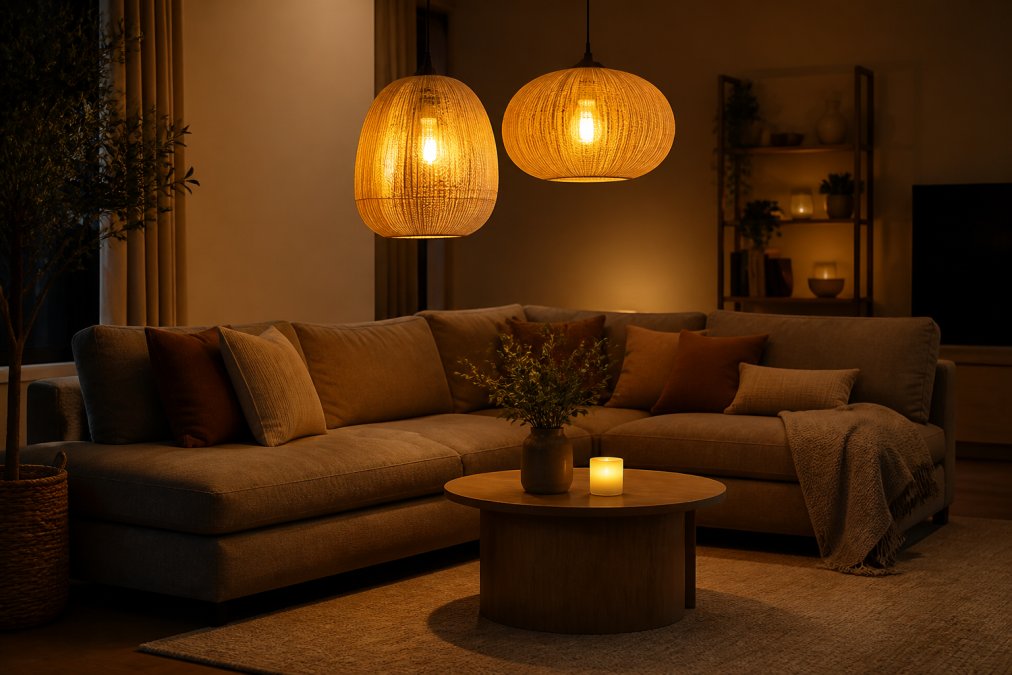
Living rooms are where you relax, entertain, and spend downtime. Warm white light (2700K-3000K) is the standard choice. It creates an inviting, comfortable atmosphere that encourages people to linger. Pair overhead warm light with accent lighting, table lamps, wall sconces, or pendant lights, to create layers and visual interest.
Bedrooms should be warm (2700K-3000K) and dimmable if possible. Dimmers let you adjust brightness as evening approaches, signaling to your body that sleep is coming. If your bedroom also serves as a workspace, add a task light at neutral temperature (4000K) for work hours, then switch to warm ambient light for evening relaxation.
Kitchens and Dining Areas
Kitchens need bright, cool light (4000K-5000K) for task work. Dining areas, however, benefit from warmer light (2700K-3000K) to create an intimate meal experience. If your kitchen and dining area are open-plan, this creates a challenge. The solution: use cool light for kitchen work zones and warm accent lighting over the dining table. Pendant lights or a chandelier over the dining table at 2700K-3000K creates a warm focal point while task lighting keeps the kitchen functional.
Home Offices and Study Areas
Home offices demand cool to daylight light (5000K-6500K). This temperature promotes focus, reduces eye strain, and keeps you alert during work hours. Overhead lighting should be bright and even. Add a desk lamp at the same temperature to eliminate shadows on your work surface. Avoid warm light in a home office unless you're deliberately trying to wind down at the end of the workday.
Lighting Temperature and Your Wellbeing
Color temperature affects more than mood, it influences your circadian rhythm, sleep quality, and overall wellbeing. This is where the science gets important.
Mixing Warm and Cool Lighting in One Room
Real homes aren't single-function spaces. A bedroom might need task lighting for reading. A living room might need bright light for cleaning or hosting. A kitchen might need warm accent light over the dining area. Mixing temperatures isn't wrong, it's smart design.
Frequently Asked Questions
Is 4000K warm or cool lighting?
4000K is considered neutral white or cool white light. It sits between warm and cool on the Kelvin scale, offering a balance that works well in kitchens and workspaces. While warmer than daylight (5000K+), 4000K appears cooler than traditional warm white bulbs at 2700K or 3000K. It provides good visibility without the yellowish tint of warm light, making it ideal for task-focused areas where clarity matters.
How does light temperature affect the mood of a room?
Warm light (2700K-3000K) creates a cozy, relaxing atmosphere that encourages unwinding, making it perfect for living rooms and bedrooms. Cool light (4000K-6500K) promotes alertness and focus, supporting productivity in kitchens and home offices. Your circadian rhythm also responds to color temperature: exposure to cool, blue-rich light during the day maintains alertness, while warm light in the evening supports better sleep. Choosing the right temperature directly shapes how you feel in each space.
Can you mix warm and cool light bulbs in the same room?
Yes, you can mix warm and cool lighting strategically. Use warm light for ambient, relaxing illumination and cool light for task areas. For example, a living room might combine warm pendant lights with cooler task lighting near a reading chair. The key is intentional placement: keep warm and cool sources visually separate so they don't create an unbalanced or jarring effect. Layered lighting with different temperatures gives you flexibility to adjust the room's mood throughout the day.
What is the ideal Kelvin range for kitchen lighting?
Kitchen lighting should typically range from 3500K to 4100K. This neutral-to-cool range provides excellent color rendering and visibility for food preparation and cooking tasks. Warm white (2700K) alone can make it harder to see details and assess food color accurately. For best results, combine overhead cool-white task lighting with warmer ambient fixtures to create both functionality and a welcoming atmosphere. Many kitchens benefit from layered lighting that supports both practical work and comfortable dining.

